 Skip to content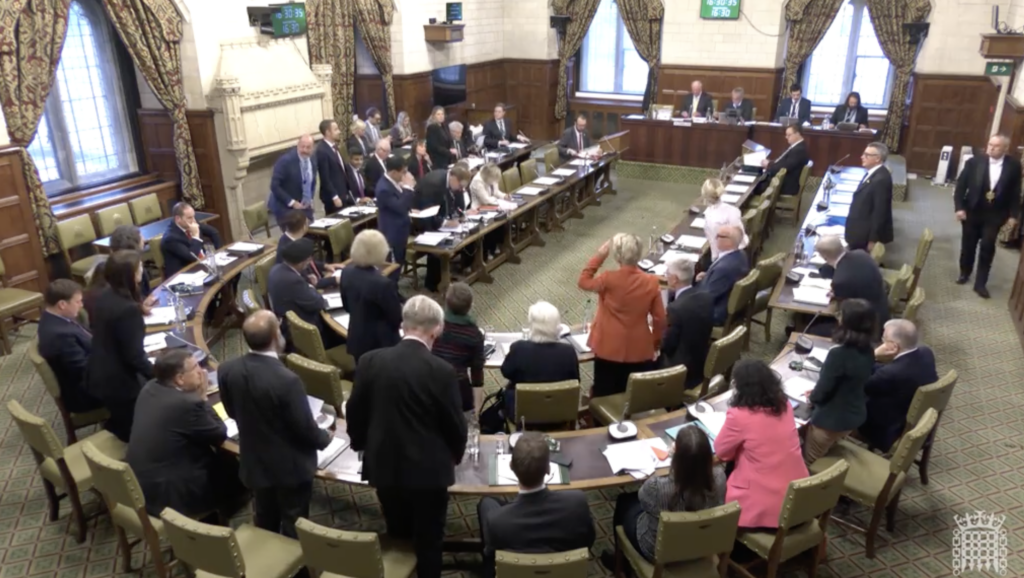
A series of Labor MPs have made the case for the UK to rejoin the EU, urging Andy Burnham’s government to consider full membership as it prepares to outline options for Britain’s long-term relationship with Europe.
The calls came during a Westminster Hall debate on a petition, signed by more than 111,000 people, which is pushing the government to apply to rejoin the EU “as soon as possible to boost growth”. The debate also follows Burnham’s announcement to the Commons that the next UK-EU summit will take place in Brussels on November 20, when he said he wanted to “establish a serious dialogue about the different options for our long-term relationship”.
Parliamentary e-petitions
Tony Vaughan, a member of the Petitions Committee, opened the debate. He argued that the “Prime Minister is absolutely right to call for a more ambitious approach.”
Vaughan said he “fully” supports what the government has done to strengthen ties with Europe. But he said “the measures that will make the most difference to our country are not in this draft agreement – at least as it seems so far”.
He added: “We should instead be looking at all the options of how to fundamentally refresh our relationship with Europe, which I believe is strongly in the interests of the British people.”
Vaughan, the MP for Folkestone and Hythe, argued that the Government could make “immeasurably” more progress in tackling illegal migration if the UK was “working within the EU or more closely with it.”
He concluded: “I strongly welcome the Prime Minister’s commitment to explore and outline the long-term options for our relationship with Europe; I urge the Minister to ensure that membership is on the list of possible options.”
Ben Coleman, the Labor MP for Chelsea and Fulham, also praised the Prime Minister’s “willingness to look at every option: a customs union, yes; a single market, yes; full membership, yes.”
He told Westminster Hall: “For me, the logic absolutely points to joining, but I can assure my constituents that I will listen, as well as argue the case.”
Coleman called for “a manifesto pledge to negotiate the European Union and then a referendum on the deal”.
Westminster Hall Debates
Rachael Maskell, the Labor MP for York Central, said her constituents have a “very clear aspiration” to rejoin the EU, “something I support.” She said that in 2016, “people didn’t know they were £3,000 worse off. They didn’t know the cost of living crisis, as a result of that, was going to come down on them.”
Helen Hayes, the Labor MP for Dulwich and West Norwood, said she supported the Prime Minister to “explore every possible option to achieve this, including the potential for us to rejoin the European Union.”
She said: “For many years there has been a focus on what improvements and changes can be made in our relations with our European partners, without considering a more ambitious consideration. We have instead focused on the improvements that can be made without going back on any suggestion.
“I think the time for that is over, and I’m glad our new prime minister recognizes that, because Brexit was really devastating for our country.”
Hayes also said there was “clear evidence of a shift in public opinion, as well as clear evidence of foreign interference in the referendum itself”.
Marsha de Cordova, the Labor MP for Battersea, said that Brexit “has been an unmitigated disaster” and that “if we are serious about growth, prosperity and opportunity, we need to look at our relationship with Europe.”
She added: “The economic case is clear… Joining the EU would significantly increase the UK’s GDP.”
Cameron promises on/off EU referendum in landmark Bloomberg speech
Daniel Zeichner, the Labor MP for Cambridge, said he “agreed with the petitioners: We should be in the EU. We should never have left.” He described himself as “heartily proud to be a citizen of Europe” and “outraged that my rights are being stripped away”.
Zeichner, who served as minister from July 2024 to September 2025, told Westminster Hall: “In my many encounters with ministerial colleagues in the European Union, I was always struck by the warmth and generosity, and indeed by the lack of rancor – they want us back, as many now openly say.”
He said that “whether it is the customs union or the single market, Switzerland or Norway”, each version “has advantages and disadvantages, and they must be evaluated calmly”.
He concluded: “The best deal was actually the one we had, and it was thrown away. Now we should support the government to try to save the best, but at the end of the day we are Europeans and we should be in.”
Other Labor MPs stopped short of calling for the UK to rejoin, but backed Burnham’s push for closer ties with the EU.
Scott Arthur, the Labor MP for Edinburgh South West, said that “joining the EU is not an easy proposition. It would take years to re-enter. So it is right that we are looking for benefits in the meantime”. Arthur argued that “incrementally closer to the EU makes sense – we have to win the argument one step at a time”.
Perran Moon, the Labor MP for Camborne and Redruth, called Brexit “a tragic failure” and “disastrous”, and welcomed “an honest conversation about our long-term relationship with Europe, with all options on the table”.
Responding for the government, Cabinet Office minister Mark Ferguson said the prime minister would “lay out options for the UK’s long-term relationship with our European partners around the summit in November and find consensus on what is best for the UK”.
Ferguson explained: “In 2016, the people of Britain voted for change and full control, but Brexit has done more harm than good.”
Ferguson’s response was notably milder than the government’s response to the petition in January, issued after it passed the 10,000 signature threshold. At the time, during Keir Starmer’s tenure as Prime Minister, the government said: “The UK will not rejoin the EU, but this government has reset its relationship with the EU with a new strategic partnership: a deal that is good for UK bills, borders, jobs and growth.”
Great Britain votes to leave the European Union in a historic referendum
During the debate, the government was urged to take a bolder stance on UK-EU relations by a number of Liberal Democrat MPs.
Al Pinkerton, the Liberal Democrat Europe spokesman, told Westminster Hall: “We believe that Britain’s long-term future lies in the European Union… Our destination is clear; a growth and defense partnership is how we move.”
Paul Kohler, the Liberal Democrat MP for Wimbledon, said Burnham “even now remains wedded to the red lines of his predecessor”, which he said meant “any progress on the much-delayed EU summit will be severely limited”.
Kohler concluded: “Let us proclaim loudly: the goal of this re-engagement is to become a full and active member of the EU one day in my lifetime.”
Pippa Heylings, the Liberal Democrat MP for South Cambridgeshire, said that 10 years on “we have a responsibility to look honestly at the consequences and costs of Brexit and the relationship we want with Europe”.
The debate also heard from opponents of a closer UK-EU relationship.
Mike Wood, the shadow Cabinet Office minister on duty, said the Conservatives “will not support the petition and will strongly oppose any attempt to drag this country back into the European Union, whether through the front door or the back”.
Conservative MP Bernard Jenkin, a long-time Eurosceptic, said: “There is a kind of fervent hope among many people here who think that somehow rejoining the EU would be transformative for the British economy…
“Let’s just look at the facts. The UK economy has outgrown France and Germany since we left the EU.”
Conservative Eurosceptics rally around ‘fresh start’ EDM
Jenkin described predictions that Brexit would damage the economy as “conjectural projections that are not things that have happened”.
Reform UK MP Danny Kruger said: “The chance remains for Britain to grow from the enormous decision the British took 10 years ago…
“The answer is not to take a step back to the EU.”
Heath celebrates as Britain joins EEC after decade of debate
