 Skip to content
Listen to this article
Estimated 5 minutes
The audio version of this article is generated by AI-based technology. Misunderstandings may occur. We work with our partners to continuously review and improve results.
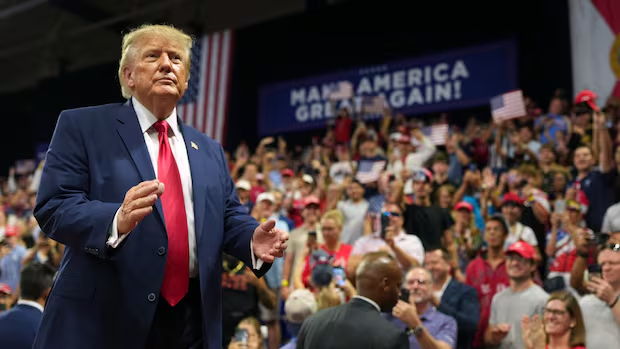
US President Donald Trump told a rally for candidates in South Florida on Friday that US warships returning from the Middle East would stop in Cuba on their way back from the Iran war, his latest suggestion to take an interventionist approach to the nearby country.
Trump first floated the idea this year, but hasn’t mentioned it in recent months. But he revived it in response to a public question about the island nation.
He was campaigning just days before midterm elections in which voters expressed concern about the impact of the US war on Iran on the prices of goods from gas to groceries.
“We’re doing a little stopover,” Trump said. “Actually, what we’re going to do with Cuba is, we’re going to come back from Iran. Those beautiful ships are going to pass Cuba. We’re going to have one of them stop about 50 yards off the coast. They’re going to raise their hands. And then we’re going to send Marco Rubio in to seal the deal.”
Both US Secretary of State Rubio and Trump have been positive about the action in Cuba, with Trump previously suggesting that the country would be “next” in terms of intervention abroad, after the conclusion of the Iran war, which he has long predicted, but which has not yet happened.
In May, he and Rubio raised the specter of US military intervention in Cuba, a renewed threat that took on more weight after the administration announced criminal charges against the island’s former leader, Raúl Castro.

Two people walk past graffiti with the colors of the Cuban flag in Havana, earlier this month.(Ricardo Arduengo/Reuters)
Trump told reporters in the Oval Office that past US presidents have considered intervening in Cuba for decades, but that “it looks like I’m going to be the one to do it.”
Rubio told reporters separately that Cuba has been a national security threat for years because of its ties to US adversaries and that Trump intends to address it.
While saying the Trump administration wants to resolve differences with Cuba peacefully, Rubio expressed doubt that the United States could reach a diplomatic resolution with the island’s current government.
Cubans Seeking Change Can Contact CIA: Rubio
Moments after Trump spoke at the rally, Rubio posted on social media that “now is the time” for action on Cuba, addressing his post “to those who are trying to create positive change” and urging them to “seize this opportunity to create the change you desire through a discreet partnership with the CIA.”
Rubio has not addressed Cuba in depth in public for several weeks, with his latest comments coming in a September 29 interview with Fox News host Sean Hannity.
“The truth is that Cuba has already fallen. It doesn’t have a functional economy and it’s ruled by people who keep preaching about a revolution that was dead for 20 years, that never worked,” Rubio said, without alluding to any CIA operation.
“We are hopeful that Cuba will choose a different path. We are hopeful … that there are some people there who will open their eyes to the reality of what they are facing,” he said.
“We will never allow Cuba to become a base of operations against American interests or pose a threat to our national security. We are very clear about that.”
Previous meetings with Cuban officials
Rubio and other top Trump aides have met with Cuban officials in recent months to explore possible improvements in relations. But the US side was not impressed by these talks, which led to even more sanctions on the Cuban government.
During his address to the United Nations General Assembly last month, Trump said Rubio — who is the son of Cuban immigrants and has long taken a hard line against Cuba’s socialist leadership — was “deep in negotiations with Cuba,” saying he “will not allow a haven for foreign adversaries to threaten America at our own doorstep.”
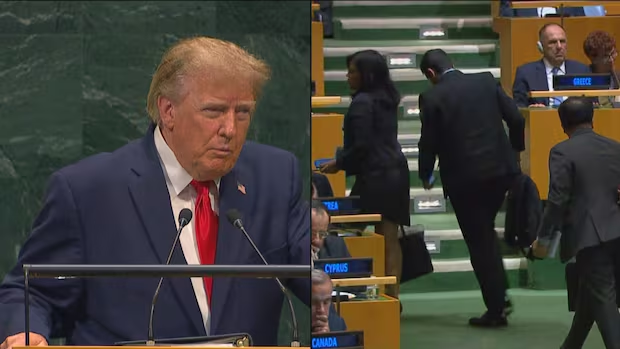
Members of the Cuban delegation left after US President Donald Trump called their country an “absolute failed state” during his speech at the United Nations General Assembly in New York.
Days later, Trump told reporters he predicted the two countries would “make a deal,” adding, “I don’t think we need the military. Cuba is failing very badly.”
Earlier this week, the two countries clashed at the United Nations as the Trump administration tried again to build opposition to an upcoming annual vote condemning Washington’s decades-long economic embargo against Havana.
Cuba has been struggling with an economic and energy crisis since 2020. Its gross domestic product has shrunk, and its 10 million residents have experienced blackouts, food shortages and inflation.
There were waves of protests, and hundreds of thousands of Cubans migrated, many to the United States.
