 Skip to content
In one of his first acts as Britain’s prime minister, Keir Starmer has slammed the UK government’s controversial plan to deport asylum seekers to Rwanda in 2024, saying it was “dead and buried before it started.”
Now five European countries are trying to revive a similar scheme.
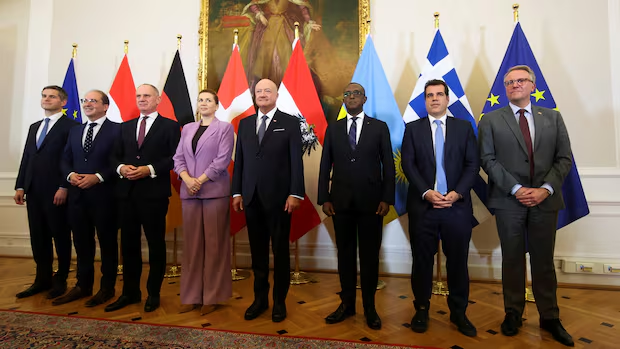
Denmark, the Netherlands, Germany, Austria and Greece announced on Monday that they are working with Rwanda to establish a “return hub” for migrants who do not have the legal right to remain in the European Union.
“We have to take back control of our borders,” Danish Prime Minister Mette Frederiksen said at a joint news conference in Vienna. “What we are pushing for is a more sustainable and, I would also say, a more orderly asylum and migration system.”
Those who are sent to Rwanda are given the chance to integrate and settle there or another nation that gives them the legal right to stay – or return to their home country.
Denmark’s Prime Minister Mette Frederiksen told a joint news conference that the EU country’s Rwanda deportation hub plan would be a “game changer” for illegal migration.(Helmut Fohringer/APA/AFP/Getty Images)
The political pressure is increasing
The plan, which some EU officials have called a “game changer”, is part of a tough stance towards asylum seekers. It comes as many European governments face growing pressure from voters and rival far-right political parties to show they can control migration.
In September, a regional election victory by the German far-right, anti-immigration party, Alternative for Germany (AfD), was widely seen as a symbol change in public sentiment towards migration.
In recent years, asylum applications have fallen in Europe, and experts point to a combination of factors, including changes in government policy and the fall of the Bashar al-Assad regime in Syria in 2024. In 2023, there were more than one million first-time asylum applications. Last year, the annual number fell to just under 670,000, according to data from the European Union.
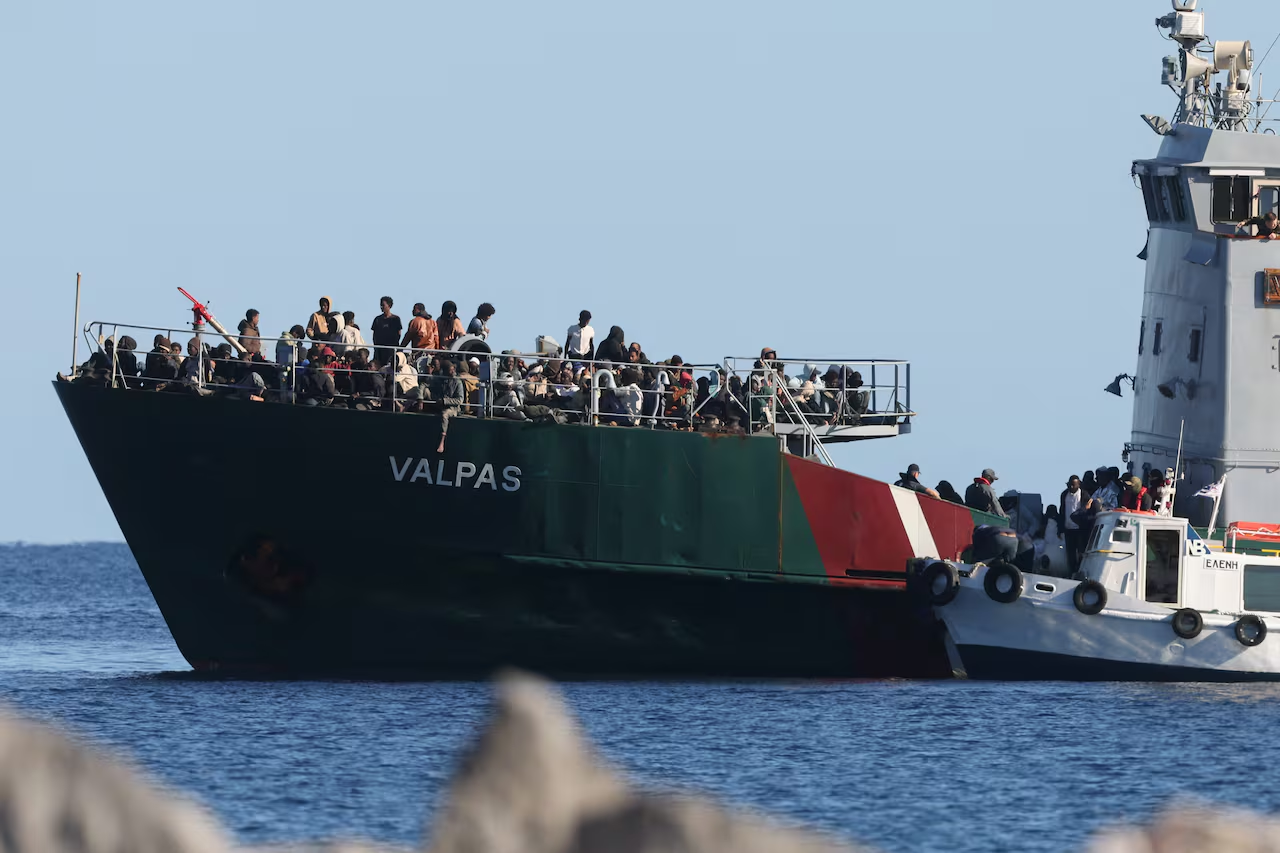
Migrants on board a Coast Guard boat from a Frontex ship, to be transferred to the port of Kaloi Limenes, after a rescue operation on the island of Crete, Greece, on November 9.(Stefanos Rapanis/Reuters)
Britain’s failed experiment
When Britain first unveiled its Rwanda partnership in 2022, then Prime Minister Boris Johnson revealed it as necessary to stop boats full of asylum seekers crossing the English Channel.
The previous year there were almost 50,000 asylum claims in Great Britain
Under the British plan, people could be sent to Rwanda while the British authorities processed their asylum claims. Under the proposed European arrangement, the east-central African nation would only take in those whose asylum applications have already been rejected and who cannot be sent back to their home countries due to a lack of cooperation.
For Rwanda, supporters argue that the agreement offers an economic opportunity, and European officials present the country as an ideal place for a “second chance”. Critics dispute this characterization, arguing that Rwanda has a record of repression. Amnesty International said that without investigation the Rwanda deal will be a “Black hole for human rights.”

Britain’s then Home Secretary Suella Braverman, left, and Rwanda’s then Infrastructure Minister Ernest Nsabimana, right, lay bricks at a housing development for migrants in the Rwandan capital Kigali on March 19, 2023. Britain has finally scrapped a controversial plan to deport asylum seekers to Rwanda.(Associated Press)
In a joint statement, 47 organizations urged countries to scrap the Rwanda plan, arguing that there are insufficient legal safeguards and no monitoring system to eliminate the risk of rights abuses.
In 2025 – two years after Britain’s Supreme Court ruled the UK’s Rwanda plan illegal – the US made its own deal with the country to accept it. 250 migrants.
No hard numbers
When European officials unveiled their agreement at Monday’s news conference in Vienna, they said they hoped to send the first people to Rwanda by the end of 2027, although they did not specify how many people would be sent there in total.
The five countries bill the plan as a pilot project, insisting it will act as a deterrent to prevent people from traveling – sometimes thousands of kilometers – to reach Europe in the first place.
“As everyone knows, criminal organizations make billions of euros from human smuggling, and too many lives are lost at sea,” Frederiksen said. “We will dismantle the business model of people smugglers. We will take back control of our borders.”
In her speech, Frederiksen said that some European leaders have been working on this type of initiative for “eight or nine years”.
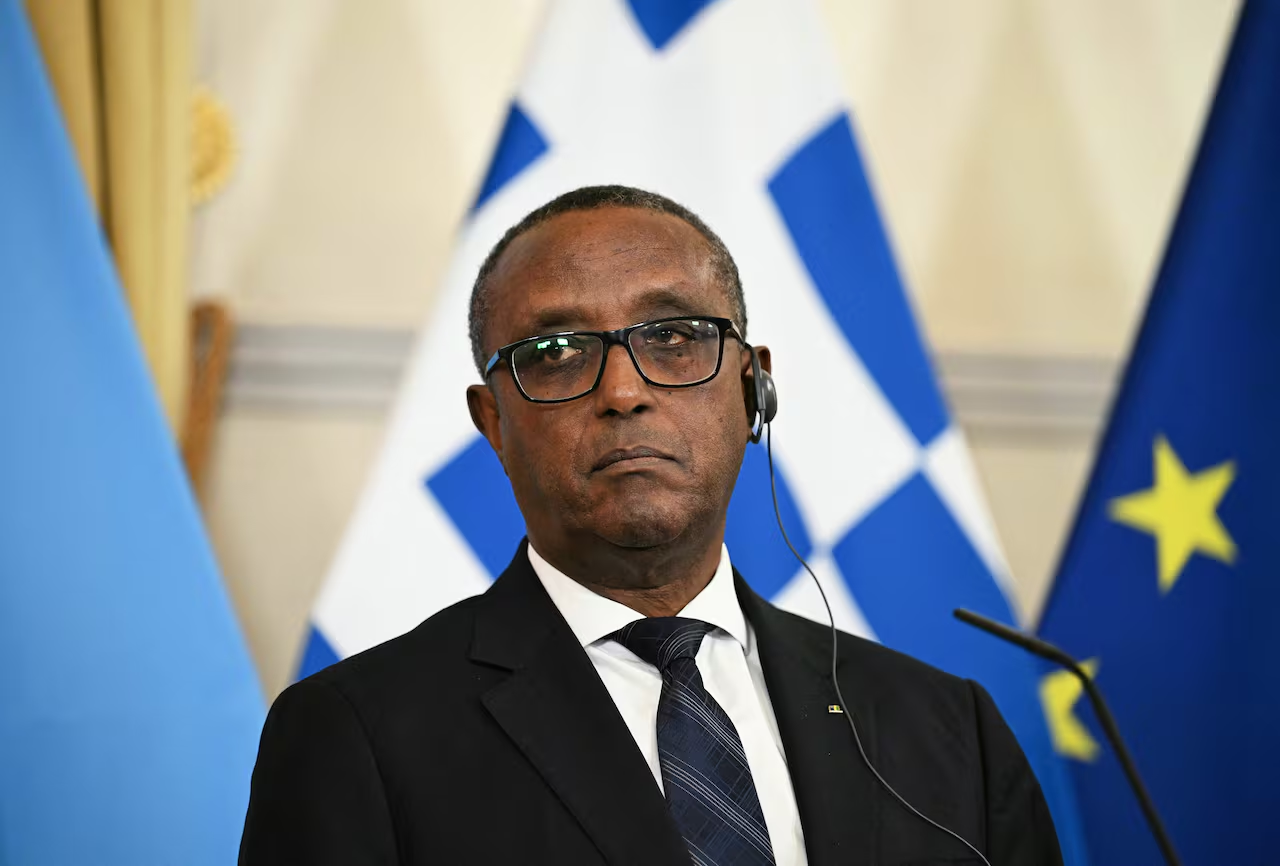
Rwandan Interior Minister Vincent Biruta says he believes that under the “Return Hub” plan, asylum seekers in Europe can decide to return to their countries of origin without going through Rwanda at all. He added that Kigali did not plan to allow “thousands” of people to remain in the east-central African nation.(Helmut Fohringer/APA/AFP/Getty Images)
New EU rules
The announcement of the Rwanda hub comes a month and a half after the Council of the European Union unveiled a new policy, the EU return regulation, which opened the door to setting up migrant hubs outside of Europe.
The rules stipulate that unaccompanied minors cannot be deported and that hubs can only be created in countries that respect “international human rights and the principles of international law”.
Clémentine de Montjoye, a senior researcher in the Africa division at Human Rights Watch, called the plan “very regrettable,” in part because of what she calls a stunning contradiction.
Europe has repeatedly raised concerns about Rwanda’s human rights record and its support for M23, an armed group accused of waging war crimes in the eastern region of the Democratic Republic of Congo.
Montjoye pointed out that Germany even reduced his help in Rwanda last year for his role in the conflict that displaced hundreds of thousands of people.
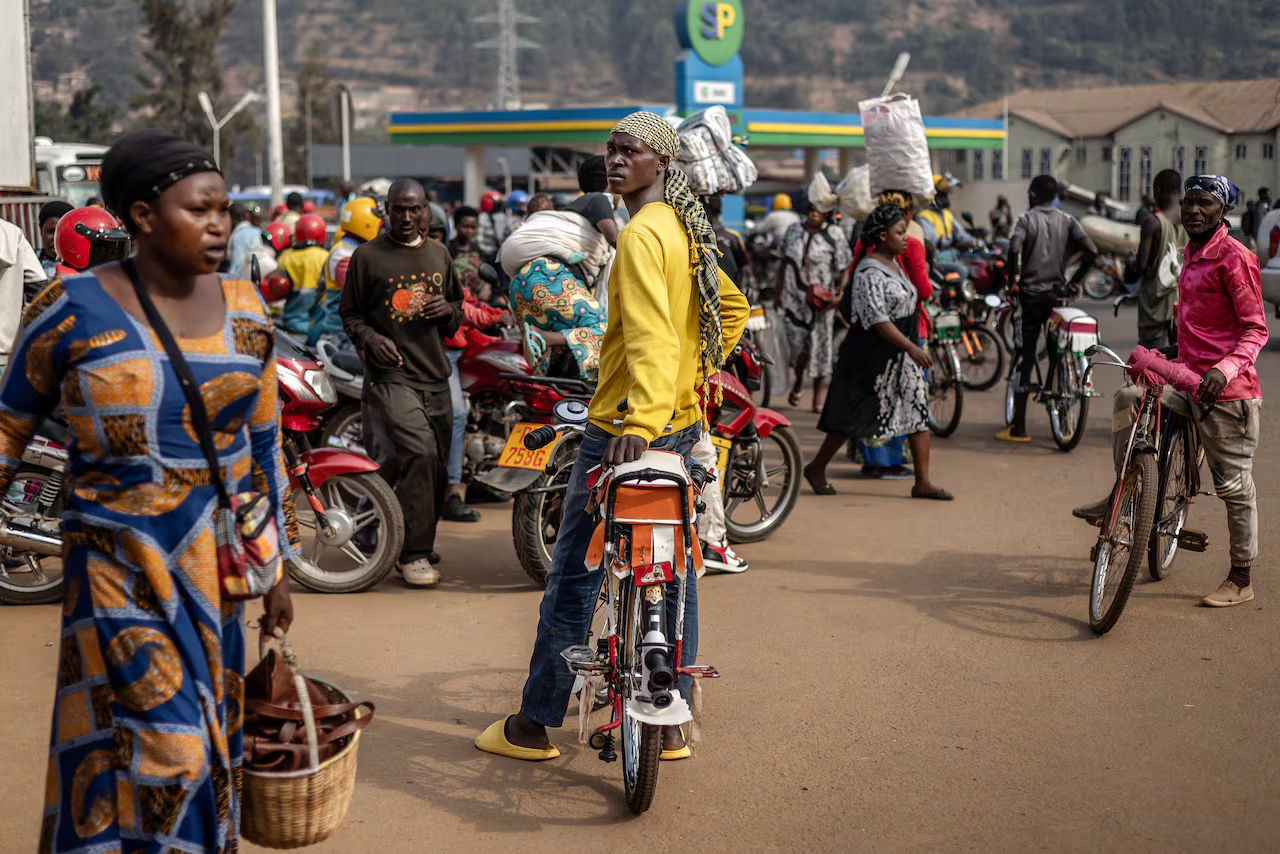
A bicycle taxi driver looks at customers at a busy intersection near a market in Kigali, July 16, 2024. The East African nation is set to host a deportation hub for failed asylum seekers from five European countries.(Luis Tato/AFP/Getty Images)
Now Germany and four other countries are trying to frame Rwanda as a country of opportunity.
“The question is: What due diligence was done by these five countries?” Montjoye told CBC News from Nairobi, Kenya. “It is very worrying that the risk of harming human rights is somehow swept under the carpet to present an image of solutions to come.”
‘Fig leaf’ of deterrence
Outlining the motivations for creating the hub, German Interior Minister Alexander Dobrindt said European countries are handicapped because countries of origin often do not cooperate when it comes to taking back rejected asylum seekers.
According to statistics from the Mixed Migration Center, which operates under the Danish Refugee Council, only one in five people who have been ordered to leave Europe actually do so.

A demonstrator holds a placard reading “Stop EU-Rwanda deal” on the sidelines of the Vienna Migration Conference hosted by the International Center for Migration Policy Development in Vienna on Monday.(Radek Mica/AFP/Getty Images)
Roberto Forin, deputy director of the center, says it is necessary to manage migration in a more orderly way, but believes that the Rwanda deal only acts as a “fig leaf” rather than a real deterrent.
He says smugglers will adapt, and asylum seekers who feel they have no alternative will continue to make risky journeys, even if the chances of staying are lower.
“This is more about politics than migration policy,” he told CBC News from Vienna. “Governments, indeed across the political spectrum, have made a hard line as part of their promises to voters.”
