 Skip to content
Here at the end of November, it’s still freaking hot in Vancouver. I have yet to turn up the heat in my apartment, and often find myself actively sweating when I’m out in the city.
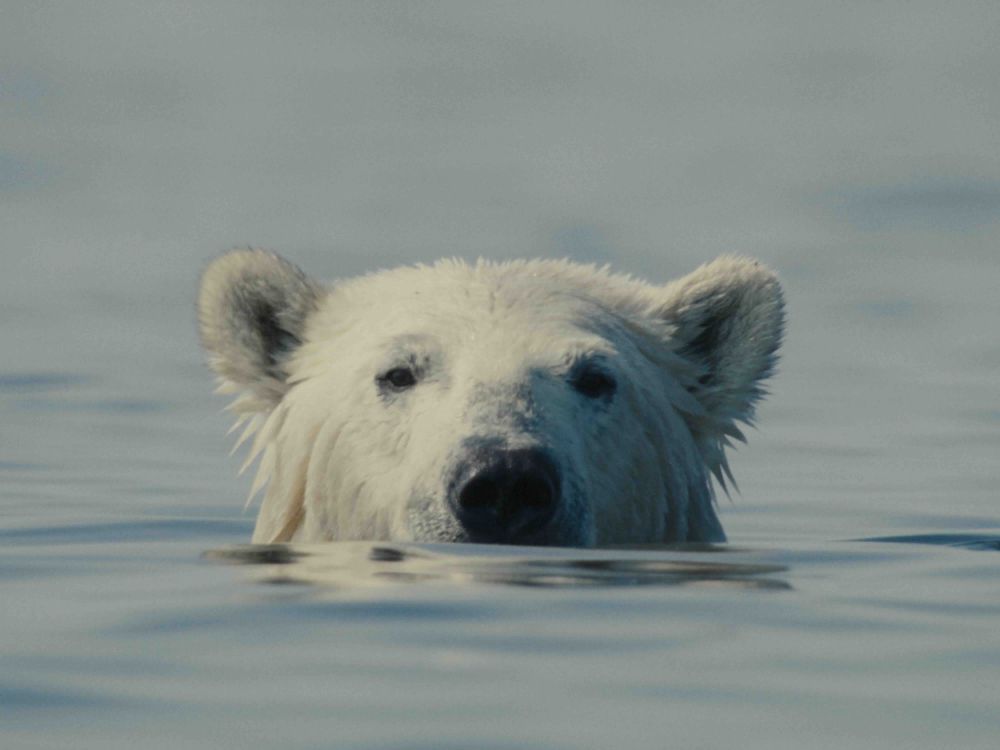
Being this hot, I can only imagine how the bears must be feeling right now.
The unseasonal temperatures have not only affected humans and other animals. They also cause entire industries.
The Whistler Film Festival kicks off next week, December 2, with a screening of Brad Bird’s animated noir opus Ray Gunn.
In previous years when I attended the festival, the snow was down to the middle, and it was cold enough that I regretted not bringing more warm socks.
As of this writing on the week before opening night, major snowfall has yet to arrive in Whistler. Both Whistler Mountain and Blackcomb Mountain recently opened for the ski season, but a lack of snow means not all runs are open. The participants of the film festival usually squeeze a few skis between films and meetings. This year there may be fewer options to choose from.
A place like Whistler probably survives on winter culture. What does it mean when the cold does not materialize?
It is a question at the center of the documentary Nuisance Bearis also playing at the Whistler Film Festival this year.
After a banner year on the international festival circuit, Canadian filmmaker Gabriela Osio Vanden and Jack Weisman’s debut feature won 17 awards and received 18 nominations. The extensive recognition for the documentary includes the prestigious 2026 Grand Jury Prize for Documentary at the Sundance Film Festival, the 2026 Best Cinematography Award at the Woodstock Film Festival, and the 2026 Werner Herzog Film Award.

Canadian filmmakers and husband and wife Gabriela Osio Vanden, left, and Jack Weisman, right, originally made ‘Nuisance Bear’ a short film for their thesis project as students at York University, where they met. They expanded it into a feature-length documentary and got married at its premiere at the 2026 Sundance Film Festival.
Photo provided.
It’s not hard to see why. Beer is an up-close-and-personal look at the people and bears that call Churchill, Man., home.
It is fascinating, often ridiculously beautiful and filled with details about the place and its people.
But there is a dark heart at the center of the story.
A trip to the ‘Polar Bear Capital of the World’
The interlocutor of the film is Inuk Elder Mike Tunalaaq Gibbons. He explains that every year, when the sea ice forms later in the season, the polar bears are forced to stay on land for longer periods of time. This is when trouble arises.
Bears and humans have given each other a wide berth, Gibbons explains. But in the warming world this is no longer possible.
Churchill, called the “Polar Bear Capital of the World”, offers an entry into history with its industries of tourism and bear watching. As accompanying herds of tourists bundled up in Canada Goose Parka trek into the countryside to search for bears, the scope of the business becomes clear.
The bear viewing vehicles, oversized buses with outside platforms allowing interactions between bears and humans, are themselves impressive in scale.
As the tourists take pictures, twitter like a flock of excitable birds, the bears roam around, sniffing the air. They seem to be taking a look to see if there is an easy way to eat these noisy interlopers.
The look of curiosity and perhaps confusion on the faces of the bears makes for an interesting introduction. But as the story progresses, even more complex elements emerge. This is clear from the opening scene of the film.
In what seems like a pure and unintentional moment, a wild mother bear is herding two young cubs. Then the camera pulls back, and a veritable scrum of photographers comes into view, the relentless clicking of their telephoto lenses snapping pictures of the trio.
Certainly the sight of a mother bear and her adorable babies is hard to resist. The harsher truth of these encounters is that they are orchestrated and managed.
Wild bears are a resource that attracts both profit and potential exploitation.
Gibbons notes that the healthy respect for boundaries that typified earlier interactions between humans and bears was marked by care for territory. In other words, the two species did their best to avoid each other. But that has changed.
The directors expanded Nuisance Bear from a short film, made while they were both in film school, to a feature. They tell the story with little interpolation and lots of amazing footage.
This is truly a cinematography film, and the story is carried by a wealth of surprising images. Chief among these is the titular bear, born in a snake, which is moved via helicopter to a more distant location. In the middle of the flight, the heavily sedated bear seems to wake up, and one can only wonder what the animal will do about its problem.
Even in the most incongruous situations, such as hanging on a longline under a helicopter, the film gives the bears a degree of dignity and respect.
Once deposited back on the ground, the animal is marked and given a bright green spot of spray paint to denote its status. A conservation officer stands on the bear’s neck. They are tasked with inserting a transmitter chip into the bear’s ear. It’s hard not to hold your breath, hoping no one gets hurt in the encounter.
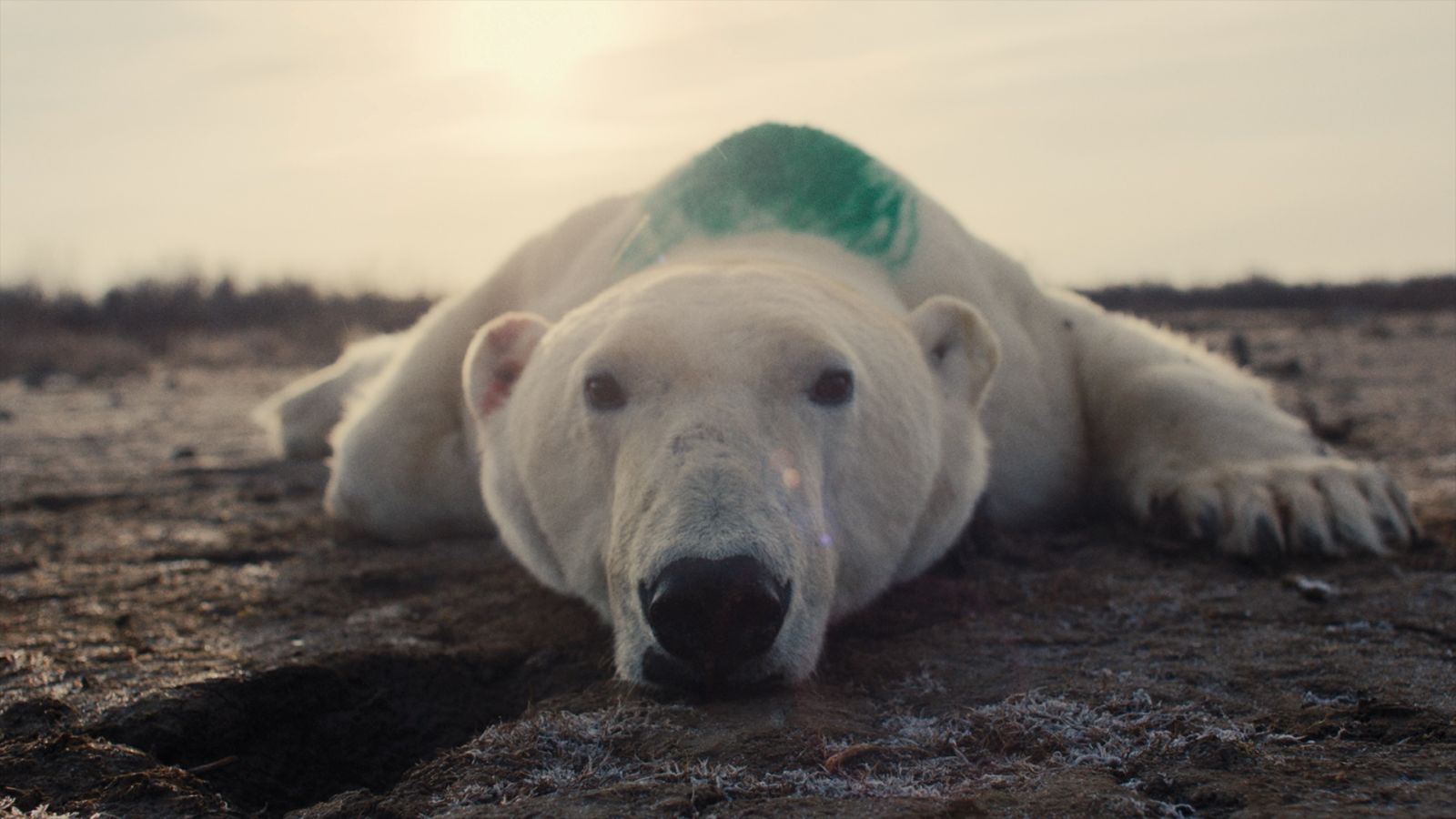
In a scene from ‘Nuisance Bear’, a polar bear is tranquilized, tagged and sprayed with green paint.
Photo provided.
A beautiful balance, in tipping scales
In the smaller community of Arviat, 260 kilometers north of Churchill in Nunavut, residents are forced to deal directly with the changing behavior of polar bears. The patrols make their rounds on quads, check in on the radio about kids playing pickup hockey and watch for bears making their way into town.
These scenes, mostly filmed at night, are among the most riveting and probably the most nerve-wracking. In the flickering light of the vehicle’s headlights, community members follow the bear’s progress, doing their best to warn the animals before something more terrible takes place.
The directors’ original short film largely avoided language. In the Nuisance Bear Feature documentary, there are many conversations taking place.
The public sits in on community meetings where residents argue that far from being a population under threat, the number of bears is actually increasing. The sense that bear tourism has supported this growth is inferred if not directly stated. Underscoring this are scenes of multiple bears rooting through the local dump.
The description of the film in the Whistler Festival Guide makes an important point about the context of the festival screening alongside larger forces at work.
“For Whistler audiences familiar with the delicate balance between bears, tourism and mountain communities, this extraordinary film hits especially close to home.”
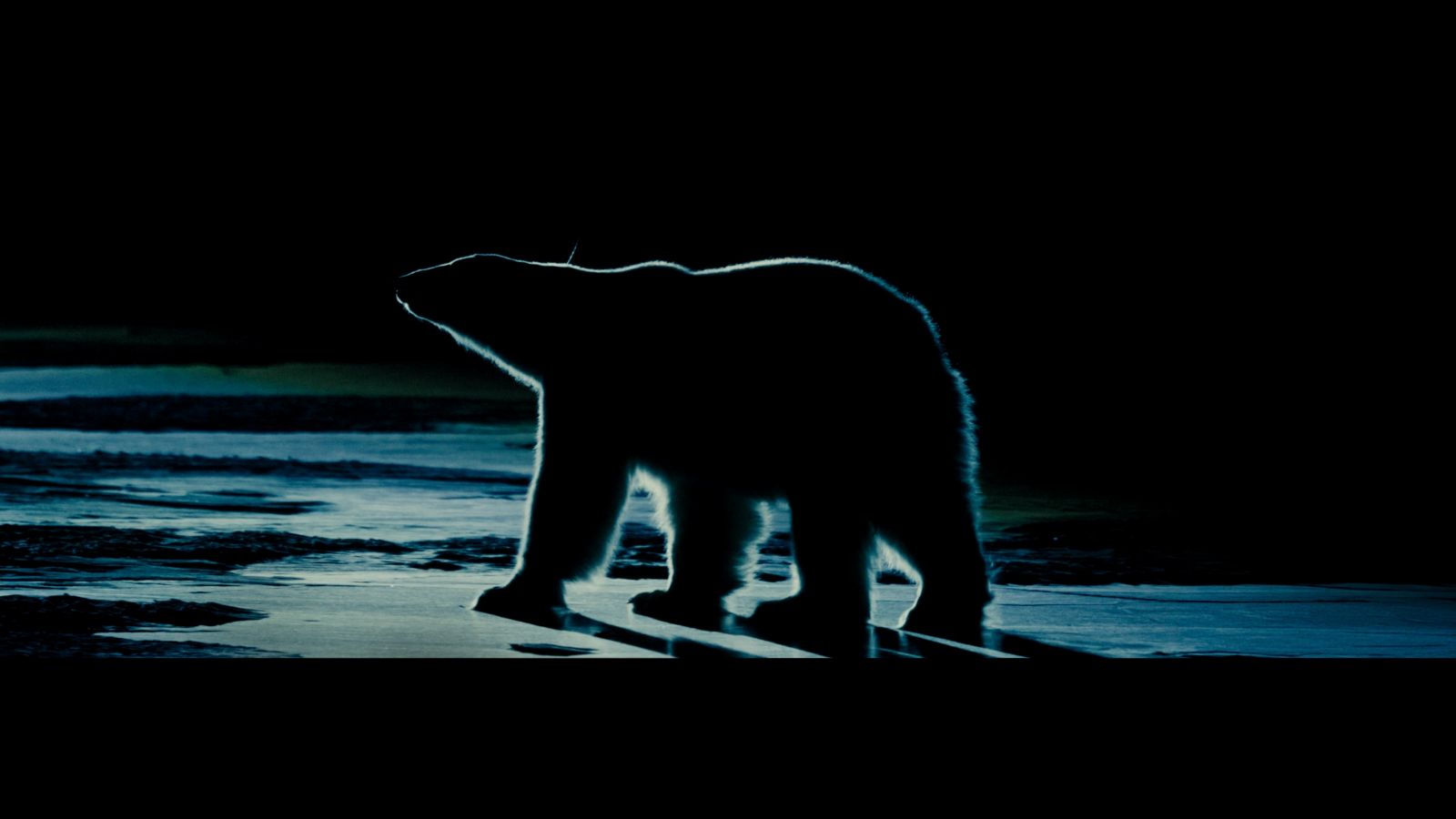
“Difficult questions arise as bears and humans get closer and closer,” writes the author.
Photo provided.
‘Not harmony but chaos’
As winter tourism stagnates in places like Whistler, what happens to the industries and infrastructure needed to support it? That remains the bigger, much more destabilizing question. Not only in ski resorts, but also probably places like Churchill, which used bears as a tourist attraction. Even more difficult questions arise because bears and humans are getting closer.
The recent grizzly attack that resulted in the death of a mother and daughter near Bella Coola, BC, brought back the darker and more terrifying encounters between bears and humans this fall.
Here is where things get more intractable.
There is an infamous quote from the famous film director Werner Herzog’s 2005 documentary Grizzly Man. The film followed the life and death of bear enthusiast and advocate Timothy Treadwell, whose sentimental ideas about peaceful human-animal coexistence were, as Herzog bluntly puts it, just that: sentimental and potentially destructive to all involved.
“I believe that the common denominator of the universe is not harmony, but chaos, enmity and murder,” Herzog said in the film.
What Herzog saw as only the “overwhelming indifference of nature” is certainly part of the history of Nuisance Bearbut anyone who has ever spent much time with animals knows that there is something deeper going on. Namely a struggle for dominance.
Voyeurism with a colonialist bent is another common aspect of many nature documentaries. To his credit, Nuisance Bear lets indigenous peoples tell their own stories in their own language. In Inuktitut, interlocutor Gibbons talks about his experiences with the residential school. He also shares his regrets, believing that he has failed to pass on Indigenous knowledge to his own children.
In another scene, as the Arviat community gathers to participate in a lottery for the annual polar bear hunt, the sense that indigenous peoples are still forced to contend with environmental changes largely brought about by populations further south is hard to escape.
Even the documentary itself comes in for closer scrutiny. As the film’s opening scene makes clear, documentary and media are often extractive industries, with filmmakers parachuting to different locations around the world to take what they want and make a story out of it.
As an immersion in northern culture and Inuit communities, Nuisance Bear is a fascinating experience.
But an underlying sadness eats at the film’s edges, making it an uneasy watch.
“No story is ever easy,” Gibbons says at the outset.
“Stories are like labyrinths. They lead us where we least expect.”
This is especially true of Nuisance Bear. It leaves you adrift with unresolved feelings about the state of the warming world and all its inhabitants.
‘Nuisance Bear’ screens at the Whistler Film Festival on December 5. The festival runs from December 2 to 6. ‘Nuisance Bear’ also has some Vancouver Screenings at the VIFF Center from December 4th. 
