 Skip to content
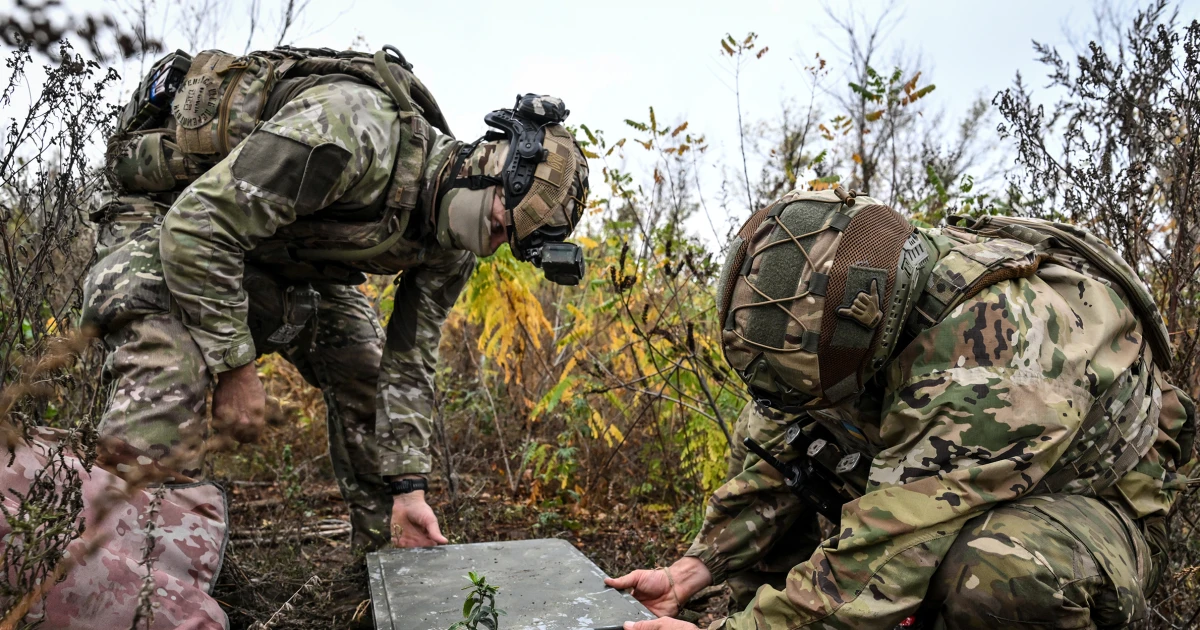
Hours after a US delegation arrived in Moscow for peace talks, Ukrainian President Volodymyr Zelenskyy said his country’s military had experienced a renewed wave of “significant disruptions” to the Starshield satellite internet service, hampering its ability to defend itself against Russia.
“These are not random errors but systematic speed restrictions,” he said in a Telegram post. “For us, this primarily means a significant complication in intercepting Russian jet-powered drones.”
His remarks came as US envoys Steve Witkoff and Jared Kushner, President Donald Trump’s son-in-law, arrived in the Russian capital for peace talks with President Vladimir Putin, a day after trilateral talks to end the war were held in the United Arab Emirates.
The two-day Abu Dhabi summit, the first such meeting since February, ended without a major breakthrough, although representatives of Russia and Ukraine agreed on a major exchange of prisoners of war.
In Moscow, Kushner told Putin that Europe wants a role in future negotiations, according to Russia’s Tass state news agency.
European countries cut off communications with the Kremlin and refused to engage with Russia directly after Putin launched his invasion of Ukraine in February 2022, but have since expressed concern about the Trump administration’s escalating stance toward the Kremlin. Kushner said last week that he also wants to address “long-term European security and stability,” signaling a focus beyond just Ukraine that has prompted a firm response from European leaders.
Expanding on that issue Thursday, Kushner said there was “very strong momentum and desire” from European leaders to “engage together,” adding that “understanding the long-term security between Russia, Ukraine and Europe is a conversation we’ve started with them.”
While representatives from several European countries were in Abu Dhabi, they did not play a direct role in the talks. Russian negotiators had previously opposed their involvement, citing Europe’s support for Kiev as an obstacle.
At the meeting in Moscow, the Interfax news agency reported that Putin proposed a joint Russian-Ukrainian humanitarian mission to the town of Kostiantynivka in eastern Ukraine, similar to the Melania Trump-brokered mission in Oleshky, which allowed residents to leave the Russian-controlled town.
Thursday’s talks were “substantive, constructive, frank and useful,” Putin’s aide Yuri Ushakov said.
Kushner and Witkoff met with Putin for about two hours before heading to Dublin, where they met with Zelenskyy for more than an hour as the conflict marks its fifth year.
Zelenskyy in Dublin indicated that the Europeans were not on the side. “Next meeting Europe will be during negotiations, will be a negotiating team – not somehow, not separately. They will have a voice,” he said.
The US and Zelenskyy want Europe to appoint a single person to negotiate with Moscow.
Zelenskyy also said Thursday that military units have reported internet speed restrictions affecting the entire front line in Russian-occupied parts of the country for several days.
A 100 mph limit will once again be “imposed on Starshield,” he said of the military version of SpaceX’s Starlink communications service. The system normally runs at a stable speed above 250 mph.
“These are not random errors but systematic speed restrictions,” he said. “For us, this primarily means a significant complication in intercepting Russian jet-powered drones.”
“Unfortunately, there have already been strikes that have gone through because our interception systems do not reach enough speed and are not able to intercept in time,” he added.
Zelenskyy added that Ukraine is trying to clarify the reasons for the restriction with the US side.
SpaceX did not immediately respond to a request for comment from NBC News.
Craig Albert, the graduate director of national defense studies at Augusta University, said that reducing Starshield’s speed would slow down how fast Ukraine’s offensive drones travel, “making them pretty much target practice for the Russians’ faster interceptor drones.”
It would also slow down Ukrainian interceptor drones and their missile defense system, meaning “Russian drones can get through their defenses much faster.”
“The Russians can target more infrastructure, and the Ukrainians simply don’t have the speed to counter,” he said, adding that “for the price, scale, speed, scalability and efficiency” there were no real options other than Starshield.
Ukraine first raised the alarm last month about the speed limits on Starshield, which is crucial for its battlefield operations and air defense.
Starlink owner Elon Musk initially put the responsibility for the restrictions on Trump, who tried to pressure Kiev to make concessions to end the war. The US government said any such decision could only be made by Musk.
Trump has denied being involved in the decision regarding the extension. Musk later said in an X post that SpaceX acted to close a “loophole” with its civilian Starlink service, accusing Ukraine of violating “Starlink terms of service” by using it for offensive drone attacks, which the country denied.
Moscow has so far resisted such efforts to bring Europe to the main negotiating table, something Ukraine has long sought.
The talks came against a backdrop of continued fighting on the front lines, where neither side has made significant progress for months.
Instead, the focus has shifted to daily attacks with long-range missiles and drones. Russia has targeted Ukrainian cities to cut off water and electricity supplies as winter begins. Kiev has resumed attacks on energy infrastructure, a campaign that has drawn Trump’s ire.
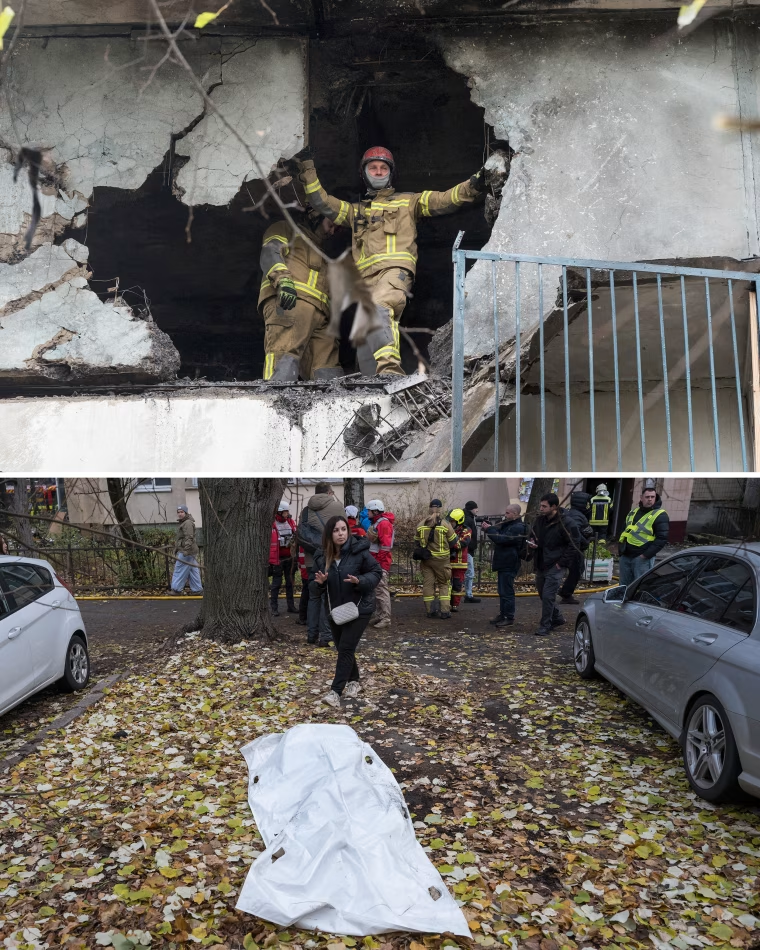
Ukrainian officials said on Thursday that five civilians were killed by Russian strikes in the country overnight, and 29 people were wounded. The Russian Defense Ministry said it had shot down 71 drones.
