 Skip to content

This is no ordinary energy shock.
Predictably, the Iran war has driven up the price of oil, but what is not typical, economists say, is rising diesel prices that have risen far beyond what a move in crude would normally imply.
“This is no longer just an oil shock,” Olivier Gervais, director of modeling and forecasting at Scotiabank Economics, said in a report this week.
Historically, refined products like diesel move with crude oil, but usually less, he said. However, this episode looks very different, adding a “differentiated and broader layer” of inflationary pressure.
The price of refined products has been pushed higher than oil this year because of challenges in transporting the products through the Middle East and because the Ukraine conflict has shut down some of Russia’s refining capacity.
“These two events combined led to a crunch in the supply of diesel on the global market and sent prices higher,” Gervais said.
To determine the impact of this additional shock, Scotiabank isolated diesel price movements that could not be explained by crude oil and traced their impact through consumer and producer prices.
“We find clear evidence that inflationary effects extend beyond energy in Canada and the United States,” Gervais said.
Economists calculate that a temporary increase of about 15 percent in the diesel spread close to what we see now, would increase the inflation of the consumer price index in Canada by 0.6 percentage points and 0.8 points in the United States.
“When diesel prices rise independently of crude oil, the impact doesn’t stop at the pump; it leads to broader price pressures later,” Gervais said.
The pass-through is gradual and persistent, the report said. Because diesel is critical to trucking, agriculture, construction and manufacturing, higher fuel costs spread across freight, production and distribution networks before reaching consumer prices.
Transportation prices are the first to rise, followed by food, shelter and other categories a year to 18 months later as higher costs work their way through the supply chain.
A separate study by Oxford Economics found evidence that US trucking companies are already passing on some of the fuel shock to customers.
Neither major crude producers with domestic refineries are protected as oil and refined products trade on global markets that set the prices.
“Even major producers such as the US and Canada remain exposed to higher global crude and diesel prices, although they have greater domestic supply security than major importers,” Oxford said.
Scotiabank warns that if the energy shock persists it will become much more dangerous.
“Product price shocks are usually short-lived, so the risk should not be overestimated,” Gervais said.
“But the longer the shock lasts, the greater the likelihood that companies will pass on higher costs more strongly, inflation expectations will become more sensitive and monetary policy will be forced to react more aggressively.”
The Bank of Canada and the Federal Reserve would be willing to see through a temporary price shock, but if it spreads to broader inflation expectations, they will be forced to raise interest rates higher.
“With upside risks starting to accumulate, this new shock adds fuel to the fire,” Gervais said.
Sign up here to get Posthaste delivered straight to your inbox.

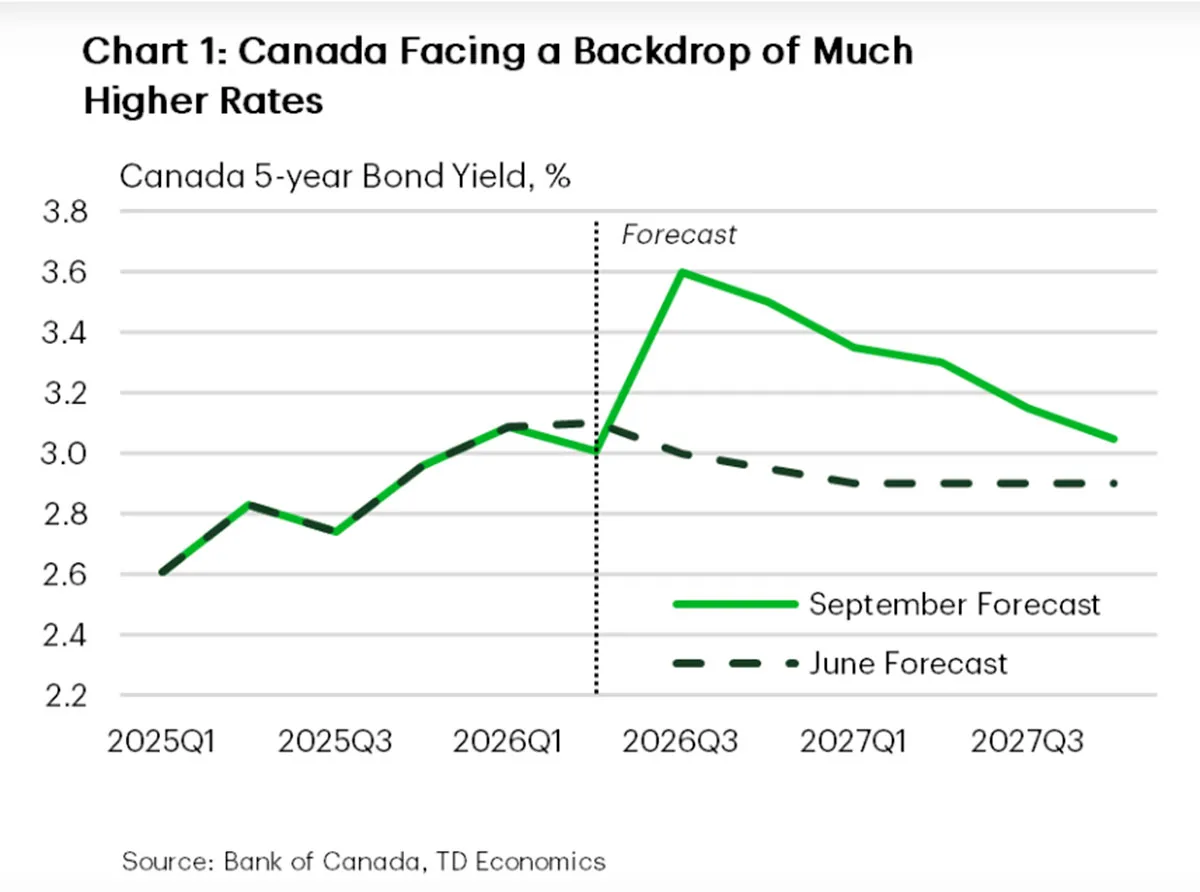
With bond yields rising around the globe, Toronto Dominion Bank revised its June forecast to reflect that Canadian bonds are not immune to the recent rise and that the forces driving rates up are set to remain.
TD says these higher yields, which underpin fixed mortgage rates, are already likely to affect the housing market with sales falling for the first time in six months in August.
The bank lowered its forecast for growth in home sales and prices and now expects sales to fall five percent this year and prices to remain flat.

- Today’s Dates: Canada and the United States Trade Lessons
- Income: The history of Constellation Brands Inc.


- Arlene Dickinson on why she is waking up Canada’s ‘sleeping giant’
- The hidden warning under record stock market highs
- The private-public development deal is reshaping student housing in Canada

One of the most dangerous signals in investing is when market indexes tell a completely different story from the underlying data, writes investment professional Martin Pelletier.
Today, the S&P 500 sits near record highs, suggesting investors remain optimistic about economic growth, corporate earnings and the future. But beneath the surface, the average stock is struggling. Market leadership is dramatically reduced, participation is deteriorating and an increasing number of companies are already in bear market territory.
The lesson is simple: when markets become dependent on a single narrative, investors should pay attention to what is happening beneath the surface. Read his column here.
 Interest and energy? The subscriber-only FP West: Energy Insider newsletter brings you exclusive reporting and in-depth analysis on one of the country’s most important sectors. Register here.
McLister on mortgages
Want to learn more about mortgages? Mortgage strategist Robert McLister’s Financial Post column can help navigate the complex sector, from the latest trends to financing opportunities you don’t want to miss. Plus check its mortgage rate page for Canada’s lowest national mortgage rates, updated daily.
Finance post on YouTube
Visit the Financial Post’s YouTube channel for interviews with Canada’s leading experts on business, economics, housing, the energy sector and more.
Today’s Posthaste was written by Pamela Heaven with additional reporting from Financial Post staff and Bloomberg.
Do you have a story idea, pitch, embargo report or a suggestion for this newsletter? Email us at posthaste@postmedia.com.
Bookmark our website and support our journalism: Don’t miss the business news you need to know – bookmark financialpost.com and sign up for our newsletters here
