The “only reasonable inference” was that the Myanmar state aimed to deliberately destroy a “substantial part” of the minority Rohingya population, it added.
In a ruling that caused concern in Israel, the ruling looked at a wide range of evidence to establish genocidal intent such as hate speech by senior officials, withholding aid and destroying housing and infrastructure.
The legal accusation of genocide against Israel, which it denies, was brought by South Africa. As with the Rohingya case, which took nine years to decide, a case against Israel would take years.
In preliminary public hearings last year, Israel insisted that its war in Gaza was a legitimate defense of its people and that it was Hamas members who were guilty of genocide.
The International Court of Justice can only hear cases of genocide when a case has been brought by a member state, and this is only the third case it has heard.
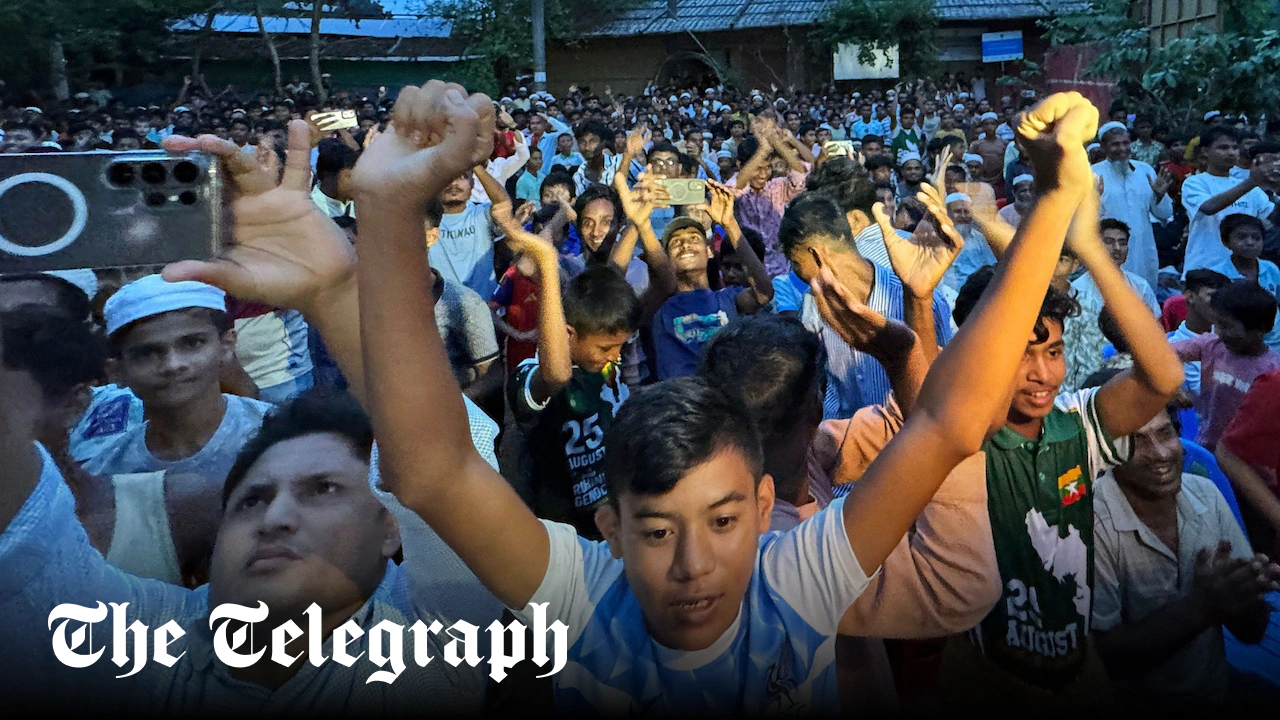
Survivors watch judgment on the big screen
Before the ruling, the US warned the ICJ against “overreach”. In a social media post, Mike Waltz, the US ambassador to the UN, said the court was “not allowed” to establish a standard for genocide that could be used to target “allied soldiers”.
The verdict was welcomed by Rohingya survivors, including those watching on a big screen live streaming the verdict in the refugee camp near Cox’s Bazar.
Tun Khin, co-founder and president of the Burmese Rohingya organization UK, left Rakhine at the age of 17 and has never been able to return home.
He told the Telegraph: “More than 390 villages were burned down by the Burmese military, thousands of Rohingya women were raped, and many children were thrown into the fire.
“So this case is a historic moment for our community. We have suffered for many decades, but this is the first time we are being heard in court.”
Matthew Smith, the founder of Fortify Rights – a rights organization that supported the genocide case – said one of the most powerful moments was when the Rohingya traveled to The Hague to give evidence in a closed session.