 Skip to content
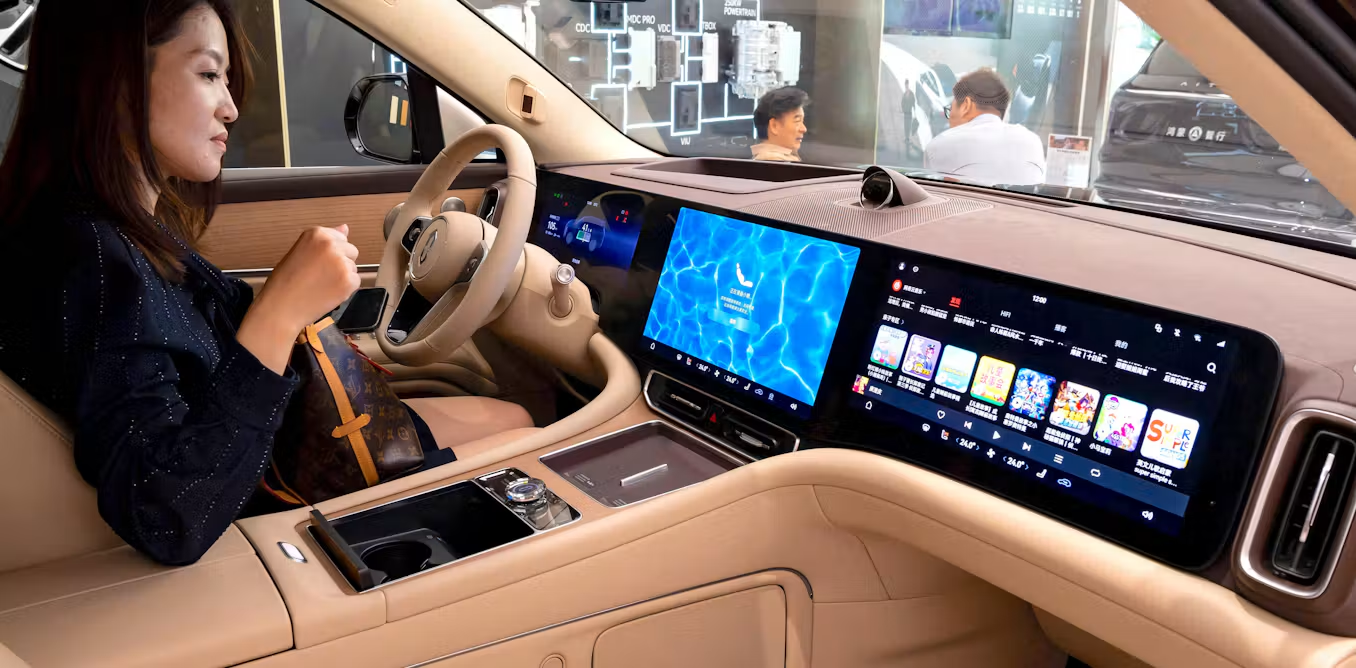
Until recently, buying a car meant obsessing over horsepower, transmission types and brand heritage. But enter the market today and the showroom floor looks very different.
With the aggressive expansion of the production of electric vehicles and the entry of smartphone giants such as Xiaomi and Huawei into the car market, vehicles are rapidly transforming into rolling computers.
This shift raises a fundamental question for the modern market: are younger consumers starting to evaluate cars in the same way they evaluate smartphones?
To understand the purchasing behavior of young consumers, we must first recognize that the automotive industry is undergoing a profound digital transformation. Traditional factors such as brand prestige and mechanical engineering, while still relevant, are steadily losing ground to software capabilities and digital integration.
Tech-focused manufacturers are prioritizing software-driven car systems, and legacy car makers are struggling to adapt. For millennials, this technological pivot is not just an added bonus; there is a baseline expectation.
Market-specific factors such as electric vehicle prices and availability in regions such as China may accelerate this trend, but the underlying data reflect a broader, cross-national generational shift among digital natives (those who grew up around digital technology, such as smartphones) revealing this shift in China, North America and Europe.
A generational perspective
When technologically minded consumers encounter an electric vehicle, they don’t necessarily see a mechanical machine with an engine; they see a hardware platform waiting on an operating system.
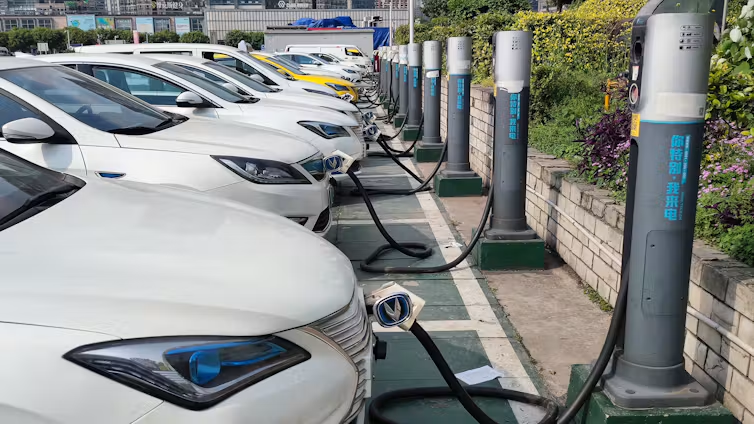
Therefore, this mentality changes how they judge the core anatomy of the vehicle. When this demographic evaluates electric vehicles, they base their decisions heavily on “product technology development” (how well the in-car technology works, for example) and “charging infrastructure” in addition to financial incentives.
This directly reflects how a consumer evaluates a smartphone’s operating speed, battery life and software updates rather than traditional, outdated car metrics.
Sports car hub
This paradigm shift is also rewriting how cars are bought and experienced. Long before a consumer ever sits in a driver’s seat, the buying journey has fundamentally changed. Younger consumers show a strong inclination towards online platforms and social media as their primary shopping channels, relying heavily on digital interactions and visually rich experiences.
Rather than turning to traditional retailer visits or printing brochures, they depend on user-generated content, peer opinions, online reviews and digital advertising to inform their purchasing decisions. Moreover, recent studies show that the evaluation criteria of this target group continue to mirror the metrics they apply to mobile technology.
Mirror digital life
When car shopping, research shows that Gen Z consumers are looking for technologically advanced and highly personalized experiences, showing a specific interest in the entertainment capabilities and software ecosystems of modern vehicles. This shows that they evaluate the digital and entertainment experience in the car in the same way they evaluate the apps of a new phone.
The intense brand loyalty traditionally reserved for Apple or Android phones has seamlessly transferred to the automotive market. Seamless ecosystem integration via systems like Apple CarPlay or Android Auto is treated as a mandatory requirement. If a car is unable to directly mirror a driver’s digital life, it fails the test.
helloabc / Shutterstock
Younger consumers review a vehicle’s multimedia and infotainment systems with the same hardware expectations they apply to smartphones. If a touchscreen displays input lag, clunky user interfaces or poor user experiences, it severely damages their perception of the entire vehicle.
Unlike older generations who have a habitual attachment to driving, younger cohorts base their transportation choices on metrics such as travel time, cost efficiency and service reliability. They evaluate transportation options rationally rather than emotionally.
Younger demographics are increasingly prioritizing shared mobility programs, such as Uber and Grab, over private vehicles. They expect personal settings and digital profiles to sync instantly when you enter any vehicle. This allows them to listen to their latest music playlists or read messages on their smartphone. This reflects the multi-device continuity they experience when using, for example, tablets and smartphones.
Just as smartphone consumers agonize over app permissions and data tracking, tech-savvy millennials, as well as Gen Zs, view connected cars through a lens of data security. Trust in the way vehicle technology and data are handled has become a primary psychological barrier to adoption.
However, a fundamental disconnect explains a striking legal blind spot identified in recent market research: while 80% of automotive executives believe they deliver an exceptional digital customer experience, only 8% of customers agree. Traditional manufacturers fail software testing because they still think like mechanics, not app developers.
Brain overload
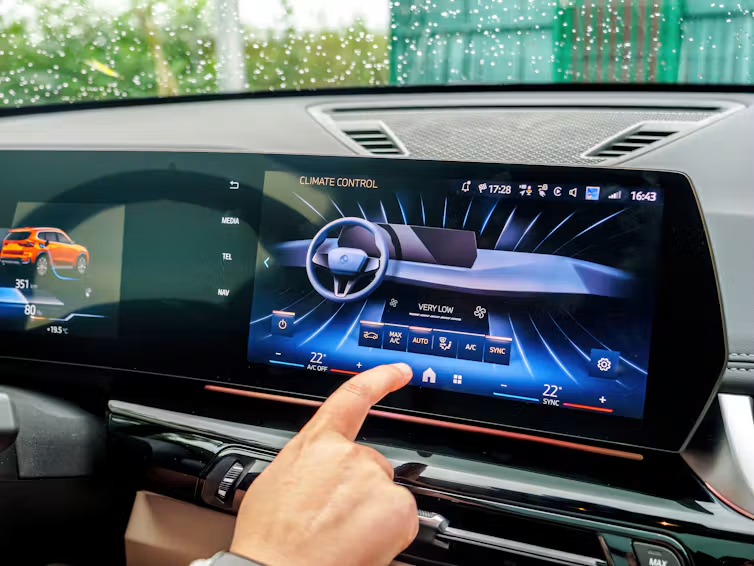
Treating a car like a smartphone, however, raises a potential problem related to the physical reality of driving. While younger consumers demand the deep customization and flexibility of touchscreens, replacing physical controls with digital submenus is massive cognitive overload.
Forcing drivers to navigate complex digital layers to adjust basic climate or safety settings diverts visual attention and increases the risks of an accident. A study argues that reaction times with screens while driving are worse than when drunk or under the influence of drugs.
Hadrian/Shutterstock
This triggered an inevitable regulatory and design backlash. Safety organizations and designers are pushing back against pure “touchscreen-ization,” noting that a car is ultimately a high-speed vehicle, not a handset.
Even major automakers, such as Volkswagen and Mazda, have publicly admitted that eliminating physical buttons was a mistake, leading to a hybrid design mandate where tactile controls for core functions must co-exist with digital entertainment.
Finally, younger consumers are evaluating cars through a smartphone-tinted lens. However, the future of the car market does not belong to the brands that simply build iPhones on wheels.
The winners will be the manufacturers who balance the digital native’s desire for software-driven connectivity with the uncompromising, safety-first reality of automotive design.
