 Skip to content
Listen to this article
Estimated 4 minutes
The audio version of this article is generated by AI-based technology. Misunderstandings may occur. We work with our partners to continuously review and improve results.
The Democratic Republic of Congo’s Ebola outbreak has claimed more than 4,000 lives, authorities said, as they battle to contain the spread of the virus.
The latest figures released by the Ministry of Health on Thursday show that 4,018 people have died, accounting for almost half of the 8,300 confirmed cases, in what has become the fastest-growing Ebola outbreak in history.
Congo announced an outbreak on May 15, caused by the rare Bundibugyo virus, which has no known treatment or vaccine.
Some health workers gathered in Bunia, the capital of northeastern Ituri province, the heart of the outbreak. They demanded payment for wages, but were quickly dispersed by the officials. The protesting workers include surveillance team members who identify people who have been exposed to infected patients. They waved placards saying, “No money, no data!” and “No payment for months.”
Frontline workers have gone on strike several times since the outbreak began, further hampering efforts to contain the disease.
A senior UN official said an Ebola-hit camp, which houses a transit center for infected patients, was burned by soldiers earlier this week as they searched for weapons in Kigonze, on the outskirts of Bunia, to help 19,000 people in the camp flee.
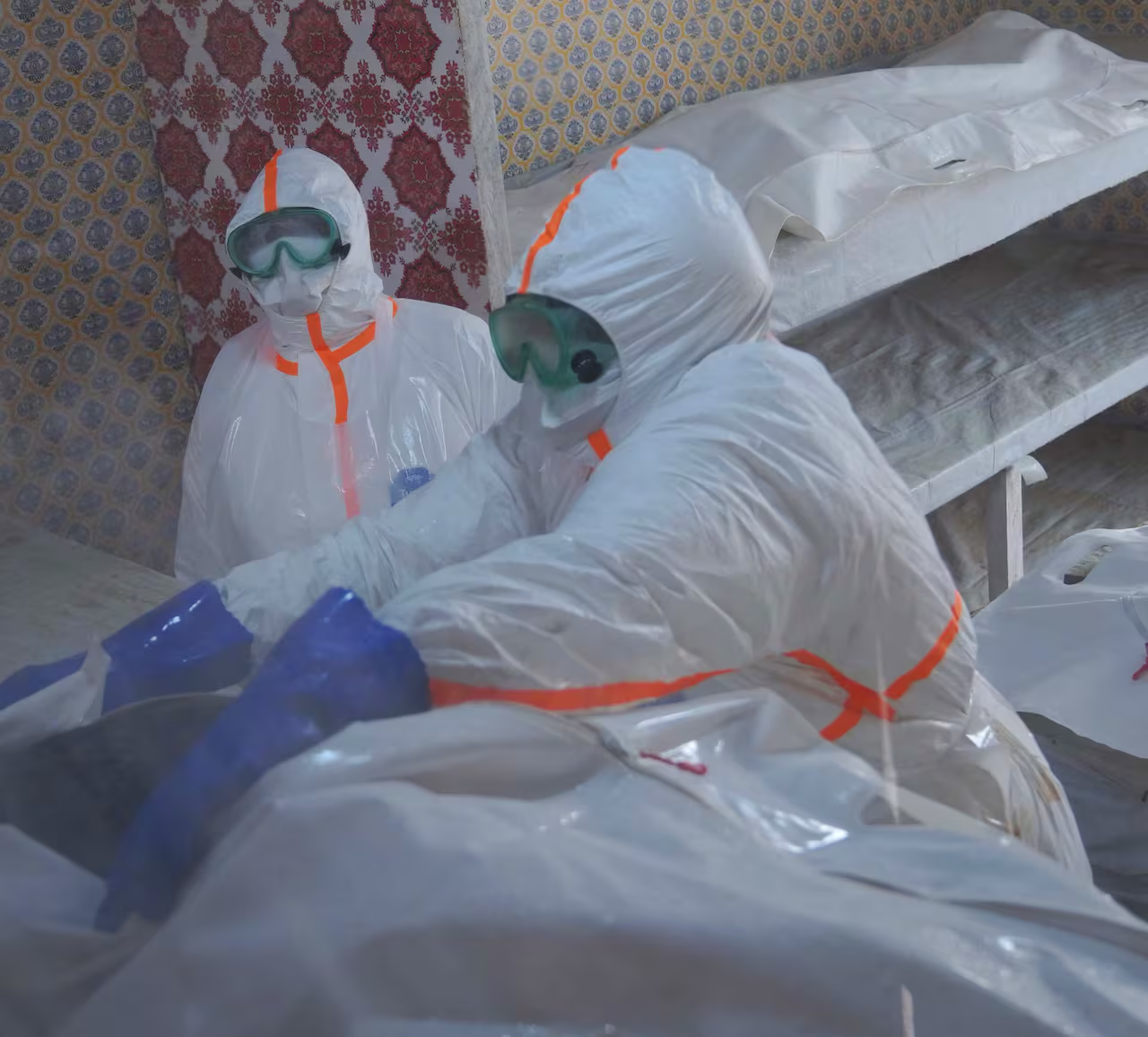
Julien Harneis, the UN’s senior Ebola coordinator, said creating Ebola transit and treatment centers has been a struggle, requiring money and staff, all of which are in short supply.
“If we lose a center, that means that we lose capacity, we lose investment and we have to start over. And above all, that means that people don’t get the care they really need,” said Harneis.
Infected aid workers evacuated in the Netherlands
An aid worker with Médecins Sans Frontières, known in English as Doctors Without Borders, was infected with Ebola while working in Congo, the group said in a statement.
The worker arrived late Thursday night after flying to the Netherlands on a special medical flight and was transferred to a high-level isolation unit, Leiden University Medical Center said in a statement.
“The human cost of this crisis is unprecedented in the DRC, with communities facing the largest Ebola disease outbreak ever recorded in the country,” MSF said.
More than 50 health workers have died after contracting the virus.
Community resistance hinders content efforts
The World Health Organization recently raised the alarm about the rapid spread of the virus to new health zones, stretching limited resources.
Africa CDC said at its latest news conference that the number of newly confirmed cases is falling, but that could be attributed to uncertainty and challenges in getting communities to cooperate in some of the hotspots. While the spread of the disease has slowed in some areas, it has accelerated in others, which experts see as a delicate situation.
Confirmed cases have slowed in recent weeks, from about 850 cases and 470 deaths per week in mid-July to an average of 490 cases and 230 deaths in September.
A Congolese politician was attacked and beaten earlier this week for defending government measures in dealing with the outbreak, highlighting tensions that have stretched both the health community and local resources.
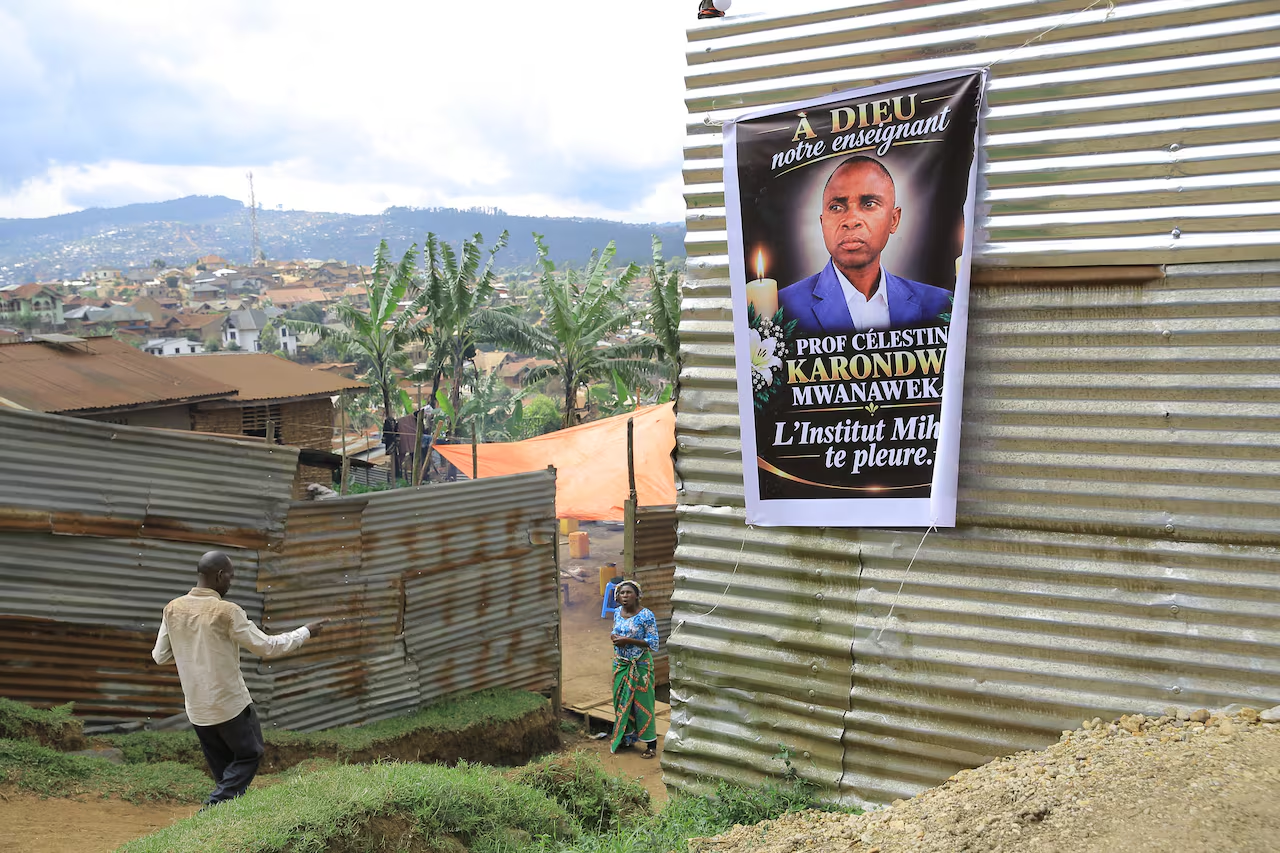
The attack on Marie-Cin thelestin Karondwa, a local official with the ruling Union for Democracy and Social Progress Party of the Congo, took place on Sunday at his home in Butembo, an Ebola hotspot in East North Kivu province. His house was subsequently set on fire, and he died of his injuries in a hospital.
Widespread distrust of health workers and the authorities has hampered efforts to slow the central African nation’s 17th Ebola outbreak.
Authorities launched a village-centered approach last month, but those efforts are facing resistance from residents who dismiss Ebola as a hoax. There is also deep distrust in the country’s government for reasons ranging from how it has been handled in past Ebola outbreaks to chronic corruption.
