 Skip to content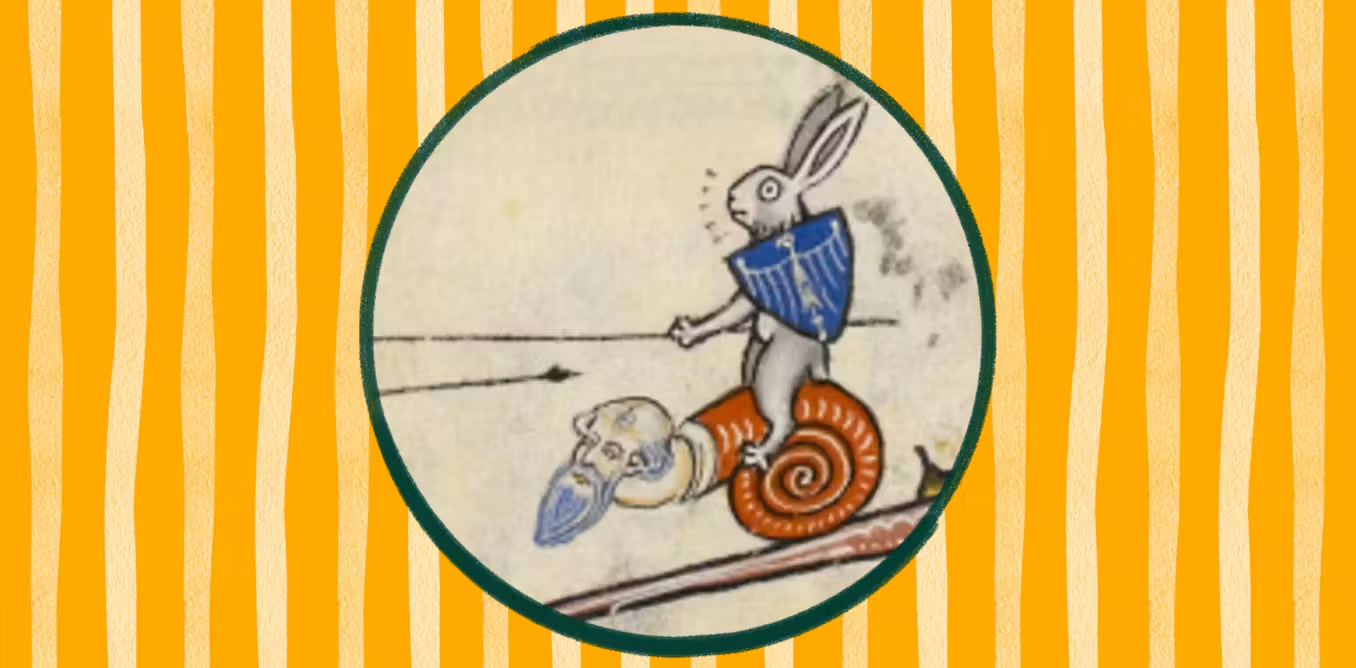
The European rabbit is a common sight in the British countryside today. However, it was not always like this. They are not native to the British Isles and are one of the most destructive invasive species.
The early history of rabbits in the British Isles tells the fascinating story of social change in medieval England. From a rare luxury bestowed by kings and the Norman aristocracy, rabbits became more common after the living standards of the poor improved in the years following the Black Death (1346 to 1353).
The satirical depictions of rabbits found in medieval books reveal a gallows humor for social inversion that would not feel out of place today.
Gifts of kings
Once thought to have been introduced by the Normans, archaeologists have since discovered a rabbit bone from Roman Britain. However, documentary evidence for rabbits in the British Isles has only been found since the Norman period.
One of the earliest references to survive from the Isles of Scilly in the form of a tithe, which was a tenth of the produce given to the church as an offering. In 1176 the landowner Richard de Wyka admitted that he had withheld tithes on his hares because he believed that “tithes are not payable on things of this kind”. His confusion suggests that rabbits were a novelty.
Rabbits continued to be rare enough to warrant the care and attention of the king in the 1200s. In 1235, Henry III gave a gift of ten live rabbits to Geoffrey Despenser, the English landowner and lord of Martley in Worcestershire, from his park in Guildford.
A few years later the king sent men to catch 30 or 40 hares in his Guildford Park. They were told to collect them only when the warren was well stocked, indicating that the king did not want the colony to be depleted.
Back then, rabbits were kept for their meat and fur. Henry III. sent orders for the supply of beef, boar, fish, swans, peacocks, chickens, eggs and rabbits for various festivals in the early 13th century. It wasn’t until his Christmas feast of 1240 that he added rabbits to his requisition list.
Rabbits were an expensive delicacy, costing four or five times as much as chicken. Their owners guarded their warrens against poaching and predators to the point that watchtowers and stone lodges were built to protect them.
Social change
But rabbits did not remain the preserve of the aristocracy. The Black Death (1346 to 1353), which killed between one-third and two-thirds of the European population, led to an improvement in the standard of living for the survivors. Land became more freely available. Workers could also pay more for their work. And many have adopted the lifestyle of those higher up the social ladder.
Legislation was introduced in 1363 to restrict what people could wear according to their social status. Its introduction was explained because of “excess clothing of people over their property, to the very great destruction and impoverishment of the country.”
Rabbits reflected this social change. They became more common in the 14th and 15th centuries when their meat was eaten by wealthier farmers and their fur was worn by aspiring artisans.
The fur of the common gray hare was used for warmth, but some warrens specialized in rare silver gray or black hares. Rabbits were still fit for a king and Henry VII had fitted nightwear with black rabbit fur.
As the number of rabbits increased through breeding, so did the number of complaints about the destruction caused by them. Manorial accounts included repeated protests about the loss of crops and damage to land caused by the lord’s rabbits.
At the same time, hunting hares and other game was considered potentially subversive. In 1390, following the Peasants’ Revolt of 1381, Parliament introduced legislation against poaching and hunting of laborers and artisans. It was feared that, under the guise of hunting, such people would make “plots and conspiracies of rebellion” against the king.
The King approved the legislation, extending the ban to the use of “hounds and ferrets, hay, nets, hair pipes, cords and all other devices for taking or destroying beasts of the woods, hares or rabbits, or other sport of Gentlefolk”.
Satirical pictures
Rabbits and hares also reveal the satirical humor of medieval society. The Killer Rabbit of Caerbannog, the fictional and deceptively deadly rabbit from Monty Python and the Holy Grail (1975), is only a modern adaptation of this ironic imagery associated with medieval rabbits.
Rabbits decorate the margins of medieval manuscripts. Playful portraits of rabbits scurrying on the backs of snails point to a gentle self-mockery permeating medieval culture—in this case, of chivalric ideals. More in line with the killer rabbit myth, some went even further, depicting rabbits as violently attacking people and seeking retribution.
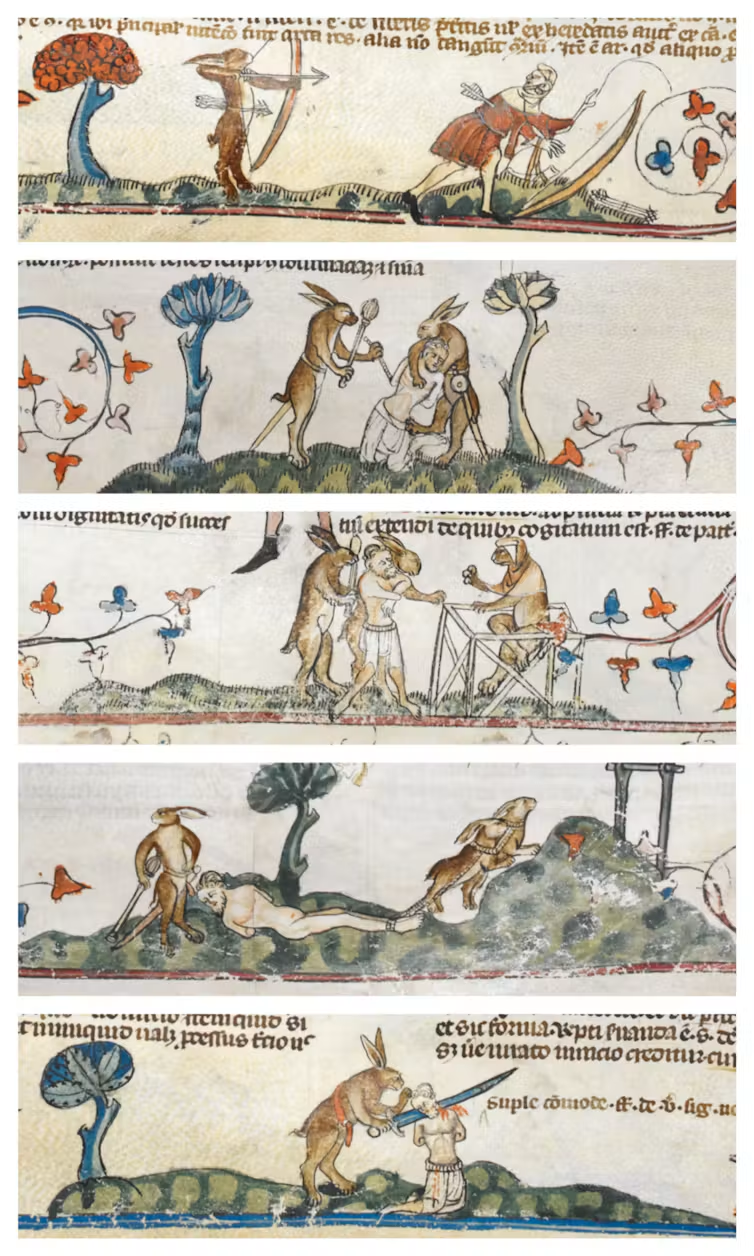
British Library
The Smithfield Decretals, a manuscript illuminated in London in the 1340s, contains one of the most elaborate of such examples. And there are rabbits depicted turning the tables on their hunters, capturing them, holding them on trial and then executing their human and greyhound hunters.
Such examples fit well in the medieval culture of inverting society – turning the world upside down – for comic relief. Similar examples include the practice of electing a boy as Bishop for the day in Durham or electing a “Lord of Misrule” during May Day games.
By 1555, the Swiss naturalist Conrad Gesner could write that “there are few countries in which cones (rabbits) do not breed, but the most abundant is in England”.
